
Jesus teaches his disciples to pray by giving them words addressed to the Father, then inviting them to keep asking with trust. In Luke 11:1–13, prayer includes honoring God, seeking his kingdom, asking for daily needs and forgiveness, and receiving help. Read the whole passage: its ending matters as much as its familiar opening.
Begin with Luke 11:1–13 in your Bible. This guide summarizes the passage in original language rather than reproducing a translation or a church’s liturgical text.
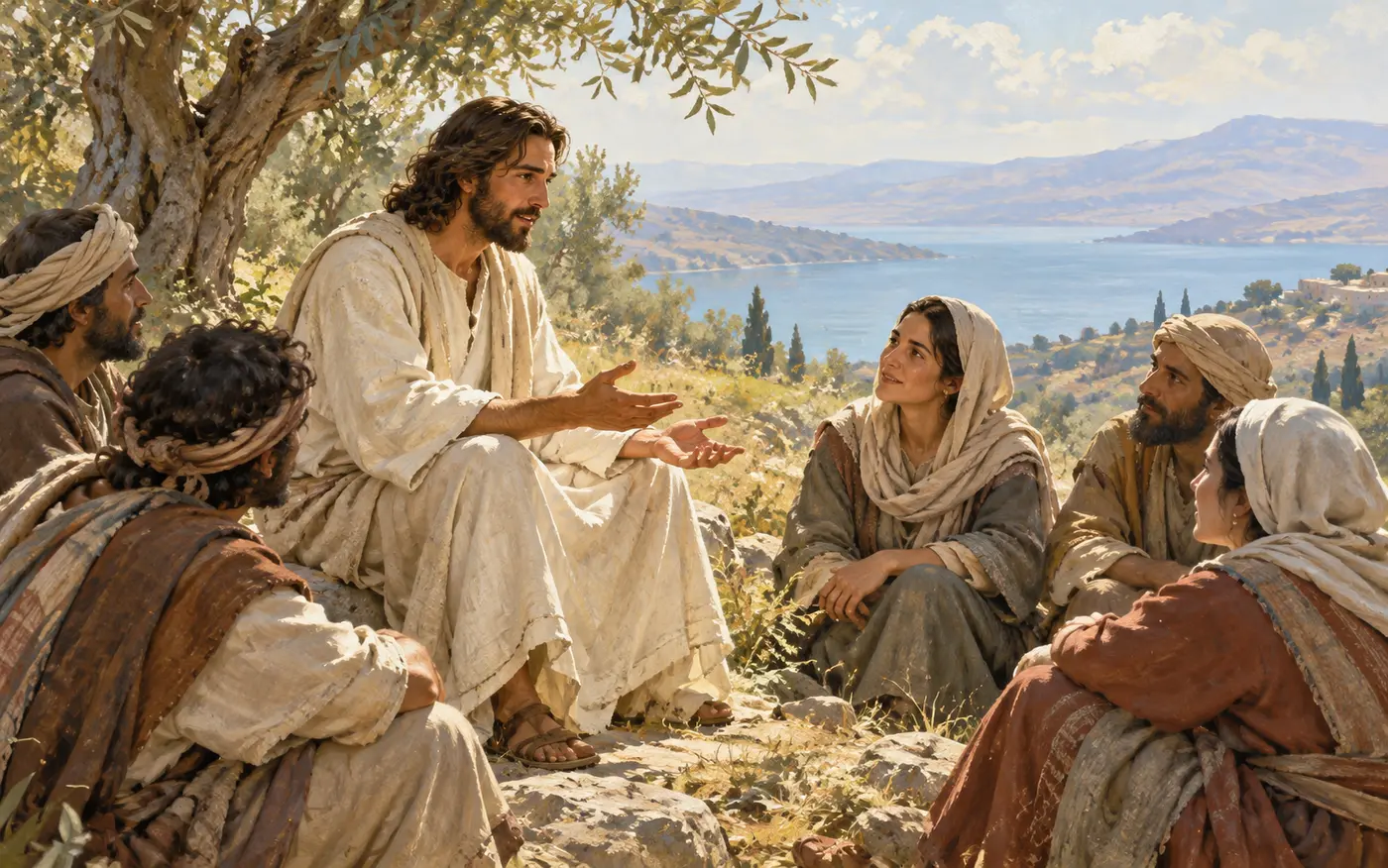
Why the disciples ask Jesus to teach them
Luke begins with Jesus praying. Afterward, a disciple asks for instruction, referring to John teaching his own disciples. The request gives a beginner a useful place to start: prayer is something a person can learn. You do not need a complete vocabulary before asking for help.
Notice the movement from watching Jesus pray to asking him to teach. A practical response is to read the passage attentively before looking for a technique. What does Jesus invite his followers to desire? What do they ask for together? Those questions help you hear more than a collection of familiar phrases.
The prayer in Luke 11:1–4
The petitions give attention to God and to the needs of a shared life. The following explanations are reading notes, not replacement wording for the Lord’s Prayer.
Address the Father
Jesus directs the disciples toward the Father. They are speaking within a relationship, not trying to impress a distant audience. You can begin with an ordinary concern while remembering whom you are addressing.
Honor God’s name and seek his kingdom
The opening requests turn attention toward God’s holiness and reign. They make room for a larger horizon than getting through your immediate list of problems. In personal reflection, ask how today’s conduct could honor God and show care for a neighbor.
Ask for daily provision
The request for bread brings ordinary need into prayer. Its shared wording also makes it difficult to think only about yourself. You might name food, shelter, work, or help with a responsibility, and remember people whose needs are less visible to you.
Seek forgiveness and practice it
Luke connects asking forgiveness with forgiving others. Let the petition open an honest examination of your conduct: where is an apology or repair needed? Forgiveness does not require concealing harm, denying responsibility, or abandoning a necessary boundary.
Ask for help in testing
The final petition concerns being spared testing or temptation; English translations express it differently. Read your edition’s note when the wording is unfamiliar. As a personal response, you can ask for help remaining faithful when a situation puts your judgment or commitments under pressure.
Why Luke and Matthew sound different
Luke 11 presents a shorter form than Matthew 6:9–13. Matthew places the prayer within the Sermon on the Mount, alongside teaching about sincere prayer. Familiar wording in worship may also reflect a particular translation and church tradition.
When comparing them, keep each Gospel’s wording and setting visible. Do not silently add a familiar line to Luke and assume it appears in every edition. The American Bible Society’s reading guide also invites readers to compare the two passages.
You can use the prayer as received in your church while studying the Gospel accounts separately. A difference in wording is a reason to read carefully, rather than to judge someone else’s sincere prayer as invalid.
The friend at midnight: Luke 11:5–8
Jesus then tells a story about someone seeking bread for an unexpected guest. The request comes at an inconvenient hour, and the household inside has settled for the night. The story draws attention to the persistence or boldness of the request.
Keep its setting in view: the person asks for bread to offer another traveler. Prayer here belongs within relationships and hospitality. The scene need not be turned into a method for wearing God down until he gives the outcome you demand.
For a simple application, name one concern you have stopped bringing to prayer because you feel embarrassed or repetitive. You can return to it honestly. When an answer remains unclear, our reflection on unanswered prayer offers room for disappointment and practical support.
Ask, seek, knock—and read through verse 13
The invitations to ask, seek, and knock continue into an illustration of parental care. Luke ends this teaching with the Father giving the Holy Spirit to those who ask. That conclusion should shape how you understand the preceding promises.
The passage is not a guarantee that every requested circumstance will unfold exactly as imagined. It invites confidence in approaching God. You can ask clearly while remaining open about what you do not know and continuing to seek wise help.
A different Gospel scene holds request and surrender together: Jesus’ prayer in Gethsemane. Read each scene in its own setting before drawing connections between them.
A short exercise for learning to pray
- Read. Begin with Luke 11:1–13, taking time with the ending.
- Notice. Choose one petition or detail that deserves your attention.
- Respond. Name a real need, something for which you are grateful, or an apology you need to make.
- Act. Choose one appropriate response, such as sharing help or following through on a conversation.
These steps are an optional devotional exercise, not instructions Jesus lists in the passage. For an opening prayer before study, use our prayers before reading the Bible.
Father, help me bring this day to You honestly. Teach me to honor You, notice the needs around me, and ask for what is needed today. Show me where I need forgiveness and where I can offer it wisely. Help me keep returning to prayer and remain open to Your guidance. Through Jesus Christ, amen.
This is an original prayer for reflection, not a quotation of Jesus’ words.
Questions about learning to pray
Must I use the same words every time?
You can pray the Lord’s Prayer using your church’s familiar wording and also bring personal concerns in ordinary language. Matthew 6 challenges prayer performed for attention and confidence placed in many words. It does not require inventing new language every day.
What if I still feel unsure after praying?
You can remain uncertain and continue praying. Name the question without pretending it has been settled. A trusted pastor, priest, or Christian friend may help you read the passage and consider your next step.
Can I ask someone to pray with me?
Yes. Say what kind of prayer or companionship would help, sharing only details you are comfortable sharing. Learning to pray can happen within a community as well as in private.
Have a concern you would like to express? You can share a personal prayer request with 7 Day Prayer Miracle. The service page explains the options.
Reading sources: Luke 11:1–13 and Matthew 6:5–15, linked above. Biblical teaching is summarized in original language; the exercise and sample prayer are original. This devotional illustration and guide do not claim a verified reconstruction of the historical scene.