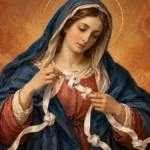
The Miraculous Medal novena is a Catholic devotion asking for Mary’s intercession and bringing personal intentions before God. If you want the established prayer text, begin with the Perpetual Novena published by the Miraculous Medal Shrine. This guide explains how to begin and offers nine days of original reflections to accompany your prayer.
“O Mary, conceived without sin, pray for us who have recourse to thee.”
This familiar invocation, included in the Shrine’s devotion, is a brief request for intercession. The daily prayers farther down this page were written for this guide; they are an optional companion, rather than a transcription of the published novena.

What is the Miraculous Medal novena?
A novena is a pattern of prayer over nine days. A perpetual novena is a devotion that continues on a recurring schedule. The Miraculous Medal Shrine’s published form is associated with its Monday perpetual devotion, which began in 1930.
These two patterns explain why you may find both a nine-day personal novena and a weekly Miraculous Medal service when you search. Choose a published prayer form and follow it consistently, or join the devotion offered by your parish or shrine.
In Catholic practice, asking Mary to pray for you belongs within a life directed toward God. The Catechism’s discussion of intercession gives the wider context for prayer with the saints.
How to begin your prayer
- Name one intention. Use a simple sentence about the person or concern you are remembering.
- Choose your prayer text. Use the Shrine’s published Perpetual Novena or the form used by your parish.
- Choose a manageable time. For a personal nine-day practice, make room for a few attentive minutes each day.
- Read the prayers slowly. Follow the published order rather than mixing several versions without understanding them.
- Add a reflection if helpful. The original nine-day companion below provides a reading, question, and short prayer.
A medal can remind you of this devotion, but you can pray without one. If you would like a medal blessed, ask a priest. The prayer does not depend on the object’s cost, the precise place you keep it, or a promise that a result will arrive on a particular day.
Nine days of original reflections and prayers
Keep the same intention in view, and allow the questions to help you see it with more care. These readings and prayers are our suggested companion to the devotion.
Day 1: Bring the intention honestly
Read: Luke 1:26–38. Mary’s response to the angel includes a question and a willing answer. Begin by naming your own concern plainly, without trying to predict how it must be resolved.
Reflect: What am I actually asking for, and what remains uncertain?
Father, I bring You this intention as honestly as I can. Help me ask without pretending to know every answer. Through Mary’s intercession, give me openness to Your guidance and courage to take the next faithful step. Amen.
Day 2: Notice another person’s needs
Read: Luke 1:39–45. The visit between Mary and Elizabeth offers a scene of relationship and welcome. Turn your attention to someone affected by the concern you are carrying.
Reflect: Whose experience have I not yet listened to carefully?
God of compassion, help me see the people within this situation. Give me patience to listen and generosity in the care I offer. Through Mary’s intercession, teach me to make room for another person’s needs as well as my own. Amen.
Day 3: Receive the good that is present
Read: Luke 1:46–55. Mary’s song praises God and remembers God’s mercy. Notice one sign of care within your present life, even if the central concern is still unresolved.
Reflect: What can I give thanks for without denying what is difficult?
Lord, thank You for the care I have received, including the quiet help I may overlook. Keep my gratitude honest. Through Mary’s intercession, help me remember Your mercy and the people whose kindness has supported me. Amen.
Day 4: Stay attentive while you wait
Read: Luke 2:15–20. Mary holds and reflects on the events surrounding Jesus’ birth. Let this day include a little space to consider what you have heard and learned.
Reflect: What deserves patient reflection before I respond?
Father, give me patience in the waiting. Help me hold the facts carefully, listen to trustworthy guidance, and resist rushing toward an answer simply to end uncertainty. Through Mary’s intercession, keep me attentive and hopeful today. Amen.
Day 5: Bring grief without disguise
Read: Luke 2:22–35. Simeon’s words include sorrow as well as promise. A devotion to Mary can make room for an intention marked by grief, rather than demanding a cheerful mood.
Reflect: What sorrow needs to be named before it can be cared for?
God, I bring You the part of this intention that hurts. Give me a safe place to speak and someone who can remain beside me. Through Mary’s intercession, help me receive comfort without hiding my grief. Amen.
Day 6: Ask and remain open
Read: John 2:1–11. At Cana, Mary notices a need and directs the servants toward Jesus. Read the whole account before making a personal application; it is a Gospel sign, not a formula for obtaining any requested outcome.
Reflect: What would openness to Christ’s guidance look like here?
Jesus, I ask for help with the need before me. Give me wisdom to recognize a responsible response and humility to receive help. Through Mary’s intercession, keep my prayer directed toward You and my actions shaped by love. Amen.
Day 7: Remain present to someone who suffers
Read: John 19:25–27. Mary is present at the cross. Consider a person who needs steady companionship, including someone whose situation cannot be quickly fixed.
Reflect: What small act of presence can I offer?
Lord, teach me to stay attentive when suffering makes me uncomfortable. Help me offer care without pressure and listen without rushing to explain. Through Mary’s intercession, give me faithfulness in the love I can offer today. Amen.
Day 8: Pray within a community
Read: Acts 1:12–14. Mary is named among those gathered in prayer. Consider whether your intention would benefit from support from your church or a trusted person.
Reflect: Who could pray with me or help carry this concern?
Father, thank You for the people who share a life of prayer. Help me ask for support when I need it and respect the privacy of those I am remembering. Through Mary’s intercession, deepen our care for one another. Amen.
Day 9: Continue in trust
Read: Romans 8:35–39. The passage places suffering within the assurance of God’s love. End the nine days by reviewing what has become clearer, without forcing the story into a completed answer.
Reflect: What faithful practice or practical step will I continue?
God of love, I entrust this intention to You as these nine days end. Thank You for what I have learned and the care I have received. Through Mary’s intercession, help me continue with patience, wisdom, and love, whether the answer is clear or I am still waiting. Amen.
What to do after the ninth day
Take a quiet moment to give thanks, name what remains unresolved, and identify a useful next step. You may continue with the Monday devotion, return to ordinary daily prayer, or bring your concern to a pastoral conversation.
If you are praying for someone else, consider what care they would actually welcome. A check-in, a visit, or practical help may be an appropriate continuation of your intention.
Questions about the Miraculous Medal novena
Is the Monday perpetual novena the same as praying for nine consecutive days?
They are related devotional patterns with different schedules. The Shrine offers a recurring Monday devotion. A personal nine-day practice is consecutive. Follow the form you have chosen and ask your parish if you are unsure about its particular service.
Do I need to own or wear a medal?
You can pray without one. A medal may accompany your prayer as a devotional reminder; it is not a condition that controls whether God hears you.
What if I miss a day?
Return to the prayer with attention rather than fear. If you are following a parish’s particular instructions, ask for guidance. In a private devotional practice, you can resume and finish your intended days.
Does a novena guarantee a miracle?
No. A novena is a way of praying, not a contract specifying an outcome or deadline. You can ask sincerely while continuing to seek care, make decisions, and receive support.
For another Marian devotion, explore our Mary Undoer of Knots novena guide. Our St. Joseph novena guide focuses on family, work, and faithful care.