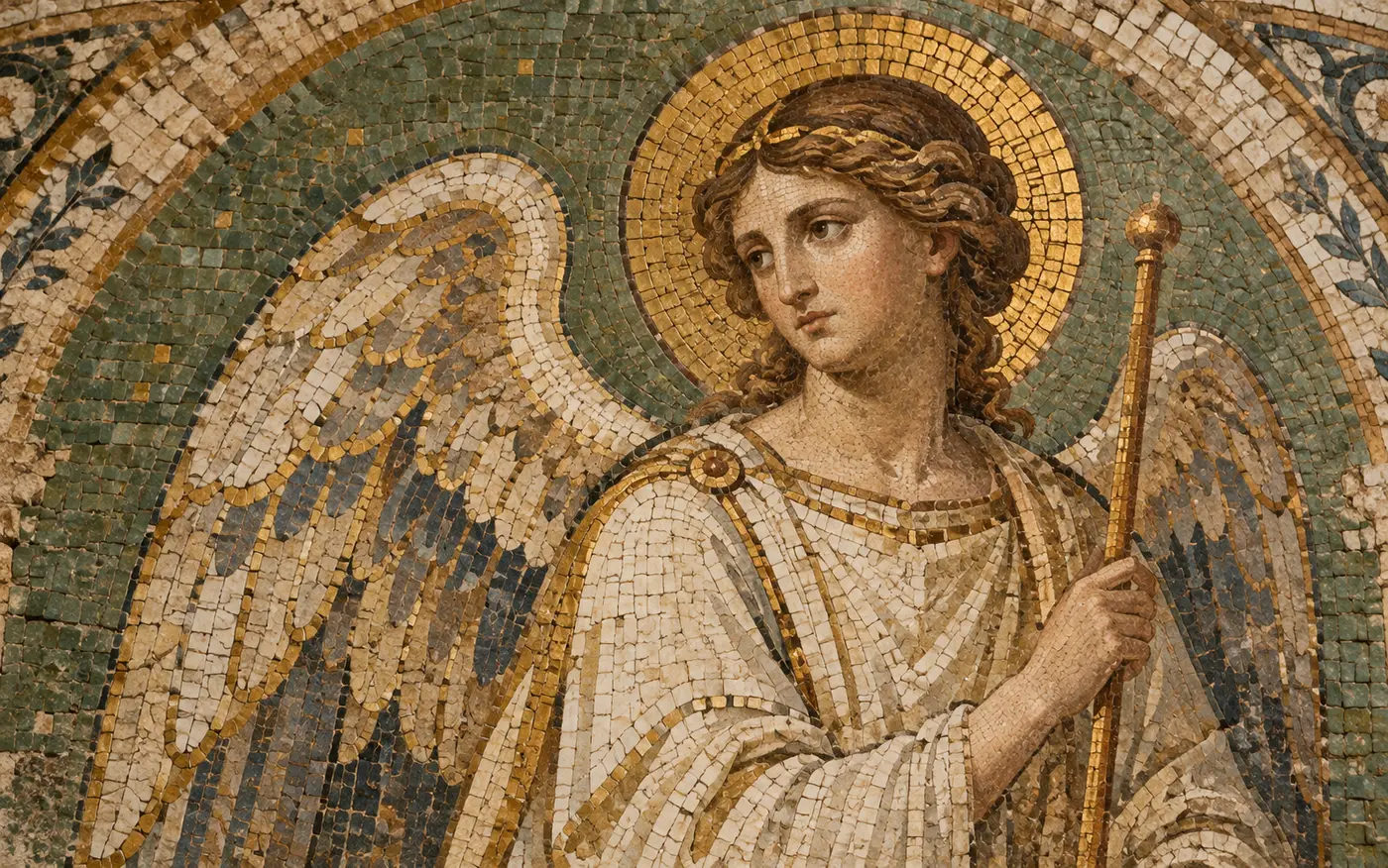
An archangel is a chief or leading angel in religious tradition. In the New Testament, Michael is explicitly called an archangel in Jude 9. Christians also commonly speak of Gabriel and Raphael as archangels, while the number of named archangels and explanations of their roles vary across traditions.
If you have seen lists of three, seven, or more archangels, the differences can be confusing. The clearest starting point is to ask where each name and description comes from: a biblical passage, a church’s teaching, or a later spiritual system.
What is the difference between an angel and an archangel?
The word “angel” describes a messenger; in Christian belief, angels are created spiritual beings who serve God. “Archangel” adds the idea of a chief or leading angel. It does not mean a second kind of god or a human being who has earned a higher spiritual status.
The New Testament uses the term in Jude 9, where Michael is named, and in 1 Thessalonians 4:16, which refers to an archangel’s voice without naming the speaker. The wording is more limited than many elaborate charts suggest.
Later Christian theology describes ranks or orders of angels. Such descriptions help explain a tradition’s understanding, but they should be labeled as theological tradition rather than presented as a complete hierarchy explicitly listed in one biblical passage.
A guardian angel describes a role of care, while “archangel” describes a title or rank. The terms should not be treated as interchangeable. Our guide to guardian angels explores that more personal question.
Michael, Gabriel, and Raphael: a quick reference
| Name | Where to read | Role and distinction |
|---|---|---|
| Michael | Daniel 10 and 12; Jude 9; Revelation 12 | Defense of God’s people; explicitly called an archangel in Jude. |
| Gabriel | Daniel 8–9; Luke 1 | Brings and explains messages; called an angel in Luke, and an archangel in church tradition. |
| Raphael | Tobit 5–12 | Accompanies Tobiah and participates in God’s healing help; named in Catholic and Orthodox biblical traditions. |
The distinction in the middle row matters: Luke’s account calls Gabriel an angel, while later church usage calls him an archangel. Raphael’s place in a reader’s Bible also depends on which biblical canon their church uses.
This guide focuses on what the sources actually say and how Christians use the names. It does not assign archangels to birthdays, colors, relationship outcomes, or guaranteed personal results. Those associations belong to other interpretive systems and require their own explanation.
Michael: defense and faithfulness to God
Michael appears in Daniel as a heavenly prince associated with Israel. In Revelation 12:7–9, he and his angels fight the dragon. Jude specifically identifies him as an archangel and depicts him appealing to the Lord’s authority.
Christian devotion draws on these passages in presenting Michael as a defender against evil. The practical spiritual emphasis is faithfulness to God, rather than personal control over an unseen force.
A reader looking for prayer rather than background can turn to our Archangel Michael prayer guide. It explains the familiar Catholic devotion and links to the traditional text.
When reading accounts of spiritual conflict, keep their literary and religious setting in view. They do not justify labeling a difficult neighbor or someone with different beliefs as a spiritual enemy.
Gabriel and Raphael: message, companionship, and healing
In Luke 1:19, 26–38, Gabriel is sent to announce the births of John the Baptist and Jesus. The messenger directs attention to God’s action and the lives of the people receiving the news. Gabriel is not presented as an independent source of divine authority.
Raphael accompanies Tobiah in the Book of Tobit. In Tobit 12:12–20, he identifies himself as one of seven angels before God and directs the family toward gratitude to God. This story underlies his association with healing and travelers in Christian devotion.
Tobit belongs to Catholic and Orthodox biblical canons; it is not part of the Old Testament canon used by most Protestant churches. Some Protestant editions include it among the Apocrypha. Naming this difference avoids the misleading claim that every Christian Bible contains the same set of angel names.
The story’s healing theme is a religious narrative, not a promise that a particular prayer will cure an illness. Readers may pray for help while continuing the ordinary care their situation calls for.
Why do lists of archangels differ?
The Catholic liturgical feast honors Michael, Gabriel, and Raphael. Orthodox traditions include additional names; the Orthodox Church in America’s account of the Synaxis names several others, including Uriel. Other religious and modern spiritual writings organize names differently again.
Tobit’s reference to seven angels does not itself supply a complete list of seven names. That is why a list should identify the tradition behind it rather than simply call itself “the biblical list.”
Use three questions when reading a guide: Where is this name found? Does that source actually describe the role being claimed? Is the writer distinguishing the source from later interpretation? You can remain curious without accepting every confident chart as equivalent.
If your interest is devotional, our guide to prayer and communicating with archangels explains the differences among Christian practices. You can also return to the broader foundation of devotion to Jesus.
Common questions about archangels
How many archangels are named in the Bible?
Michael is the only angel explicitly named with the title “archangel” in the New Testament. Gabriel is also named in Scripture; Raphael is named in Tobit, which Catholics and Orthodox Christians receive as Scripture. Calling all three archangels reflects church tradition as well as the texts.
Do archangels become human or come from deceased people?
Christian teaching distinguishes angels from human beings. An archangel is not understood as a person who died and was promoted to angelic rank.
Do prayers have to pass through an archangel to reach God?
No. Christians can address God directly in prayer. Traditions that ask angels for intercession do not make an angel a required gatekeeper who determines whether God can hear.
Scripture and tradition: Jude 9 · 1 Thessalonians 4:16 · Daniel 10:13, 21 · Daniel 12:1 · Revelation 12:7–9 · Luke 1:19, 26–38 · Tobit 12:12–20 · USCCB: Saints Michael, Gabriel, and Raphael · Orthodox Church in America: Synaxis of the Archangels · Catechism of the Catholic Church, 328–336 · Westminster Confession of Faith, chapter 1. Biblical passages are summarized; sample prayers and reflection exercises are original.